

DOG TRAINING OFFERED IN-PERSON AND ONLINEOur dog training services are delivered in almost any format that meets your needs. We have GROUP CLASSES at our indoor and outdoor facilities on our farm, ONLINE LIVE STREAMING classes, and SELF-PACED VIDEO-BASED training through our Online Dog Training Course. Our PRIVATE TRAININGS can be done in-home, outside, in public dog-friendly locations, at our facility on our farm, online via phone or video conferencing and through email. |
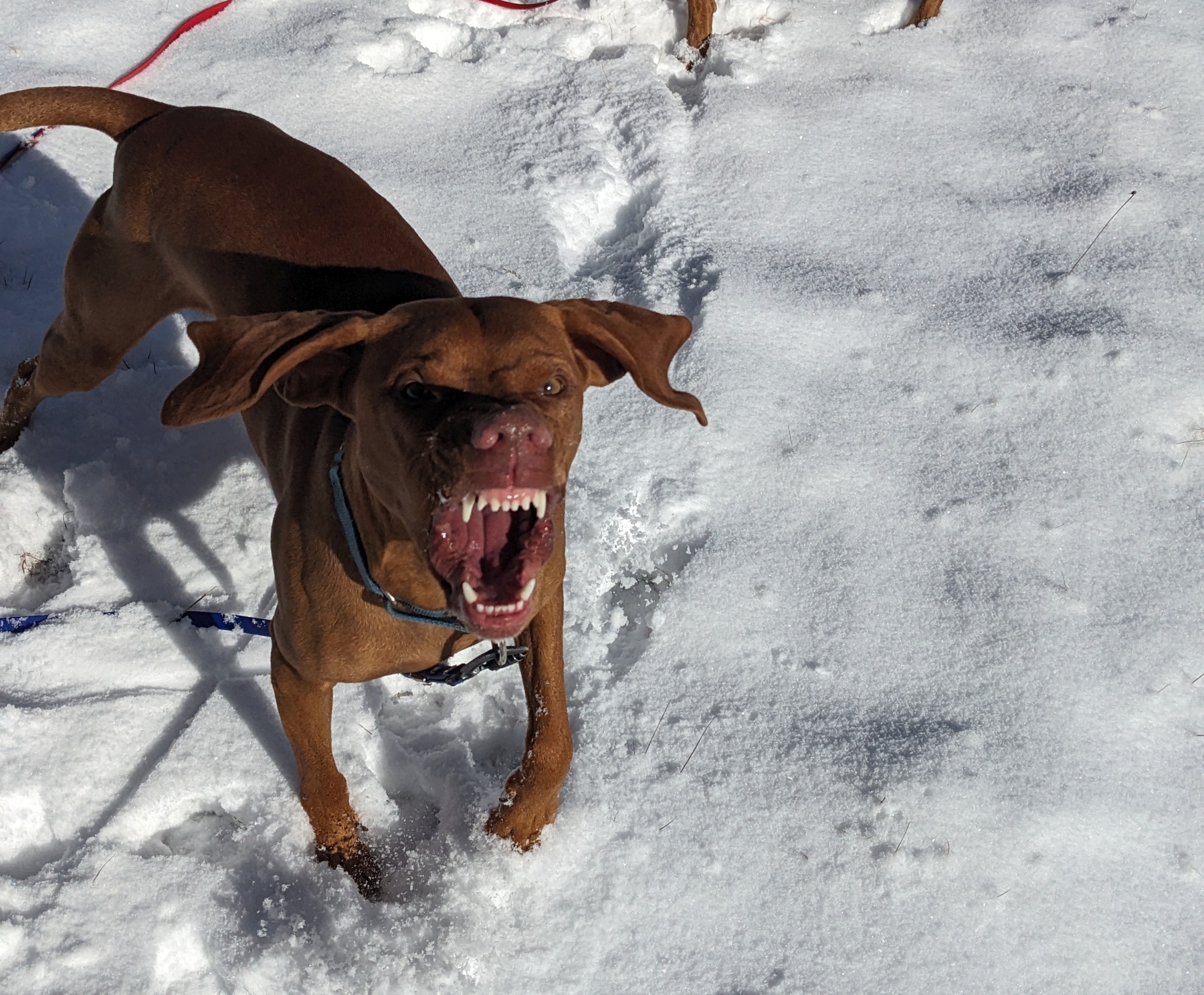
What is one behavior of dogs that can drive you crazy? If you said “barking” you are not alone! Barking is one of the issues that can drive just about anyone bananas. Even the most patient among us can struggle with maintaining our cool if a dog is barking excessively.
Dogs do bark. That is a fact of life. If you want NO barking at all, well, you probably should not have a dog. A cat might be a better option for you! Some amount of barking is normal and to be expected. But the EXCESSIVE barking is where it can become a problem.
Barking at things – the delivery person, the visitor in your house, the deer passing through, the squirrels in the trees – is pretty common. Barking in short spurts at something is normal. Some will bark when they play or are excited. Some will bark when they are afraid or stressed. Some will bark when they want attention. Or want you to throw the ball. Or can't reach the ball that rolled under the couch. Some bark when they are excited or happy. Some express their feelings through their barking. There are lots of reasons for barking.
But when does it become excessive barking? That can be tough to clarify since everyone might have their own opinion about it. It becomes excessive when the barking goes on for longer than is reasonable for normal communication. A few seconds? Fine. A few minutes? Yes, that is pretty normal dog behavior in some situations. Several minutes? That starts getting into possible excessive territory. An hour? Several hours? Yes, now it is definitely getting excessive!
Again, some of this is open to interpretation. A few minutes might be ok for you, but it irritates your neighbors or someone else in your household. It always gets trickier when someone else is complaining, especially if they are calling the authorities in your area and reporting you for it. Might be someone else in your apartment building or the neighbor who lives right next door. Or maybe you have a baby trying to take a nap and the barking is preventing the baby from sleeping. Or it might be ok during the day when your dog is outside, but not in the middle of the night.
You can see that “excessive” can have different interpretations depending on the situation. The point is that there is a situation (or several) where your dog is barking more than is acceptable to someone – whether it is you or someone else being impacted by the barking.
Now, what do we DO about the excessive barking? Well, if the dog would just be QUIET when you say so, that would be great! But it usually does not work quite that easily. Sometimes, sure. But often, it takes a bit more work to reach our goal of a lot less barking.
The goal in most cases will be to reduce the barking, not eliminate it entirely. What we need to do is figure out what we WANT the dog to do in this situation. Just asking the dog to be QUIET will often not be enough. Any time we want to reduce an unwanted behavior, we need to give the dog an ALTERNATIVE behavior to take its place.
The goal with an alternative behavior is to teach the dog an INCOMPATIBLE alternative behavior. As best we can, we want to ask the dog to do something that replaces the current unwanted behavior with a behavior that does not allow the dog to bark.
Now, incompatible behaviors to barking are tricky. There are a lot of things I could ask my dog to do that still allow him to bark. Sit? Yep, he can still bark. Down? Yep, he can still bark. Go to your Place? Yep, he can still bark.
So what are some alternative behaviors we can use? Some will make it HARDER to bark but not impossible. That's ok, we just need to establish the expectation that the dog does NOT bark WHILE doing this other behavior.
Some good alternatives include behaviors that give the dog something to do with his mouth. Go get a toy. If you have something in your mouth, it's harder to bark. Touch (nose to hand, keep your mouth closed). It is harder to bark with your mouth closed.
Other behaviors might make your dog less inclined to bark. For example, most dogs prefer to be standing up when they bark. Down or a Down/Stay might still allow the dog to bark, but the Down position is less ideal for barking. I might ask for a Place/On Your Mat cue. My On Your Mat cue implies that you are QUIET when you are on your mat. (We practice it that way often, and set the standard when the dogs are less likely to bark at first.)
It takes some work, but with some consistent practice and some clear consistent expectations, we can build in that alternative behavior for those situations that drive us bananas right now.
All that being said, we do also have to look at WHY the dog is barking. For example, if the dog is barking because they are fearful of something, then we need to address the FEAR. The barking in this case is just a symptom of how the dog is feeling. Until I address the underlying issue, in some cases, the barking might be reduced but the fear is not. I need to understand what motivates my dog to bark in order to make sure I am addressing the real problem or the underlying issue.
In some of these cases, addressing the barking with an alternative behavior will not be enough if I am not addressing a fear or stress issue.
If you are not sure, or are not having success with your attempts, then it might be time to hire a professional Behavior Consultant to help you!
Our goal is to positively impact the lives of as many dogs and their families as we can, in part through our extensive library of video, infographics and text articles. |









Leave A Comment