
DOG TRAINING OFFERED IN-PERSON AND ONLINEOur dog training services are delivered in almost any format that meets your needs. We have GROUP CLASSES at our indoor and outdoor facilities on our farm, ONLINE LIVE STREAMING classes, and SELF-PACED VIDEO-BASED training through our Online Dog Training Course. Our PRIVATE TRAININGS can be done in-home, outside, in public dog-friendly locations, at our facility on our farm, online via phone or video conferencing and through email. |
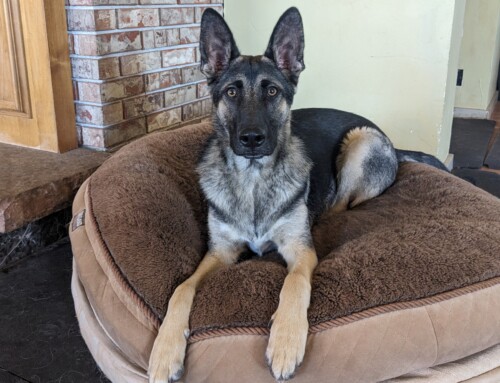
During this month of May we’re celebrating two birthdays here. Birthdays can be a time to celebrate. Who doesn't love to get presents on their birthday?! But birthdays can also be a time to reflect and assess where your dog is at in their development, their training, their life stages. Are we young and still developing? Are we a mature adult? Are we a senior dog starting to slow down a bit?
The Puppy Phase: This Isn’t the End Result, This is Your Chance to Guide Your Dog in the Right Direction
We worked with a new puppy recently—calm, quiet, easygoing. The kind of dog people look at and think: “Wow, we got lucky.” Maybe. But here’s the reality: There is no guarantee this puppy is going to continue to be calm and easygoing. He might. He might not. If you want to keep that going, don't hope for the best. Work at it.
They’re not showing you who they are going to be. They are showing you who they MIGHT be. Or not. Depends where things go from here. Do you want to just wait and see what happens or do you want to shape what happens?
Takeaways (Puppy Stage)
- Calm behavior early on does not guarantee calm behavior later.
- Don't assume they will maintain some behaviors – or outgrow others. Help guide them.
- Early behavior can turn into habits. That works for the bad as well as the good!
The Teenage Phase: Where Things Can Easily Fall Apart
This is where things can unravel if you're not careful! That cute little puppy turns into an adolescent. Or a young adult. You say, “Oh, he's still a puppy!” No, he's not. He's an adolescent with an adolescent brain. Or a young adult with an adult brain, but a young one.
We either assume he's still a puppy and will outgrow it. Or we assume he looks like an adult and should act like one. We either let things go because it's still early. Or we blame the dog for not being mature enough. Neither is doing your dog any favors. Understand where he is in his developmental stages and make sure we are taking the right steps to end up that wonderful mature adult he will eventually (hopefully!) become.
Socialization can drop off too early. You took him to puppy class and had play dates. You took him out for lots of walks and met the neighborhood dogs and kids. Then he turned into a teenager and started to get embarrassing or difficult to take out. So you stopped. It's so easy to lose those social skills if we don't keep practicing them – in the right ways. Free-for-all play without proper supervision and guidance can create just as many problems as no more play or social activity.
He looks grown up. He's definitely not that little puppy you brought home months ago. He should act like an adult. He should listen. He should respond right away. Every time. How many teenagers do you know who are reliable and never make mistakes? If the brain is not fully developed yet, we can't expect perfection. And let's face it, even with a fully mature adult brain, how many humans do you know who make the best decisions and do exactly what they should every single time? Yep, that's what I thought.
Don't make excuses for your dog, keep working on things. Help them to keep making better decisions more reliably. But also do not blame them for goofing off or not being super consistent yet. We still have some work to do!
Takeaways (Adolescent / Young Adult Stage)
- Training doesn’t stop when your dog “knows” it.
- Expectations should rise when your dog is ready, not on your timeline.
- Consistency matters.
The Mature Dog: When You Can Relax a Bit
This is when the maturity catches up with the training and we hopefully have that wonderful dog we dreamed about. He responds pretty reliably. He's not perfect, but he's pretty close.
This is when you can take a breather. You don't STOP training. You just don't have to go at it so hard. Keep up with maintenance training to make sure your dog remembers everything you've worked on.
This is your chance to enjoy your dog who makes good choices. Mostly. You and your dog just enjoy being together and don't have to work so hard. You communicate well with each other. You understand each other better. You train because it's fun. You get to play around with some things that you both enjoy. Not because you have to. Because you want to.
Takeaways (Mature Adult Stage)
- Training is lower key and used to maintain all you've done.
- Train or do activities for fun not because you have to.
- This is your chance to coast and enjoy all the prior work you put in.
The Senior Dog: When the Rules Change Again
Then comes the phase most people don’t give much thought to. The senior dog hopefully stays healthy as long as possible, but they can start to slow down. They might have arthritis. They might be losing vision and/or hearing.
We worked with an older dog this month whose arthritis was making it hard to use the steps into the back yard. Her family bought her a custom ramp to make it easier on her, but she would not go up or down it. Not because she couldn't do it. Because it felt different. It felt scary.
- The surface/ ridges to provide traction felt weird to step on.
- The gradual incline was long and felt daunting.
- The sides to help stabilize her felt confining.
So we didn’t try to force her to do the entire ramp right away. I brought a smaller ramp that we could walk across while it lay flat. That was not so daunting. Flat and short. She could do that.
Then we moved to the actual ramp and just asked her to step on the edge. Don't go down the ramp, just step your front feet on it. Down is harder? Let's start with going up.
You like chicken? We can place as much chicken as you want along the way. Pretty quickly, she went ALL the way up the ramp! And she did it again. Amazing what some high value treats can incentivize her to attempt!
And within a short session, she shifted from: “I can't do it!” to “Maybe I could try it.” That’s the real win. Not completion. Building confidence.
Within a few days, I got a message that she was going both UP and DOWN the entire ramp easily!
Takeaways (Aging Dogs)
- Physical changes can look like behavior problems.
- Make sure your dog feels SAFE doing the things you need.
- Elderly dogs are never to old to learn new things!
So What Do Birthdays Really Mean?
Celebration time? Of course, have some fun! But it's not just about presents. Use them as checkpoints. Take a moment to ask:
- What stage is my dog actually in?
- What has changed physically or mentally?
- What do they need NOW to be successful?
Because the best thing you can give your dog is an honest assessment of what they need from you right now.
Final Thought
Training isn’t something you finish. It's a lifelong process. The dogs that do best over time aren’t the ones who learned quickly or didn't need much training. They’re the ones whose people kept observing and adjusting to meet their dogs needs at each stage.
So when your dog's birthday rolls around… Celebrate it! But also — take the time to assess where your dog is at and what you can do in this next year to help them live their best lives.
Our goal is to positively impact the lives of as many dogs and their families as we can, in part through our extensive library of video, infographics and text articles. |


Leave A Comment