
DOG TRAINING OFFERED IN-PERSON AND ONLINEOur dog training services are delivered in almost any format that meets your needs. We have GROUP CLASSES at our indoor and outdoor facilities on our farm, ONLINE LIVE STREAMING classes, and SELF-PACED VIDEO-BASED training through our Online Dog Training Course. Our PRIVATE TRAININGS can be done in-home, outside, in public dog-friendly locations, at our facility on our farm, online via phone or video conferencing and through email. |
Below is video of some of our Parkour students demonstrating some of their skills on a variety of obstacles on our farm. Boo-da is a Chihuahua mix who loves performing and is pretty confident! His brother Moti is a Black Lab mix who also loves to participate. Sulley is an Old English Sheepdog who is willing to participate if treats are involved!
What is Dog Parkour?
Dog Parkour is an adaptation of human parkour. Sometimes called urban agility, it’s about using the everyday environment—walls, trees, logs, benches, boulders, or anything else around you—as a playground. Instead of specialized agility equipment, parkour is done with whatever’s available: jump on or over, crawl under, balance across, weave through, pause and sit on. Think of it like agility training, but portable—you can do it anywhere.
Dog parkour blends obedience, agility, and confidence-building exercises. It encourages dogs to interact with the world around them in creative ways, while teaching them safe movement skills. Dogs learn cues like:
- Up: jump onto or climb an object like a rock or bench
- Over: hop across a log, rail, or low wall
- Under: crawl beneath an obstacle
- Through: weave through poles, trees, or barriers
- Balance: walk across a narrow surface like a curb, beam, or log
It’s less about speed (like competitive agility) and more about exploration, teamwork, and fun.
Where Can You Do Dog Parkour?
The beauty of parkour is that you don’t need a special setup:
- Neighborhood walks: curbs, steps, fences, retaining walls
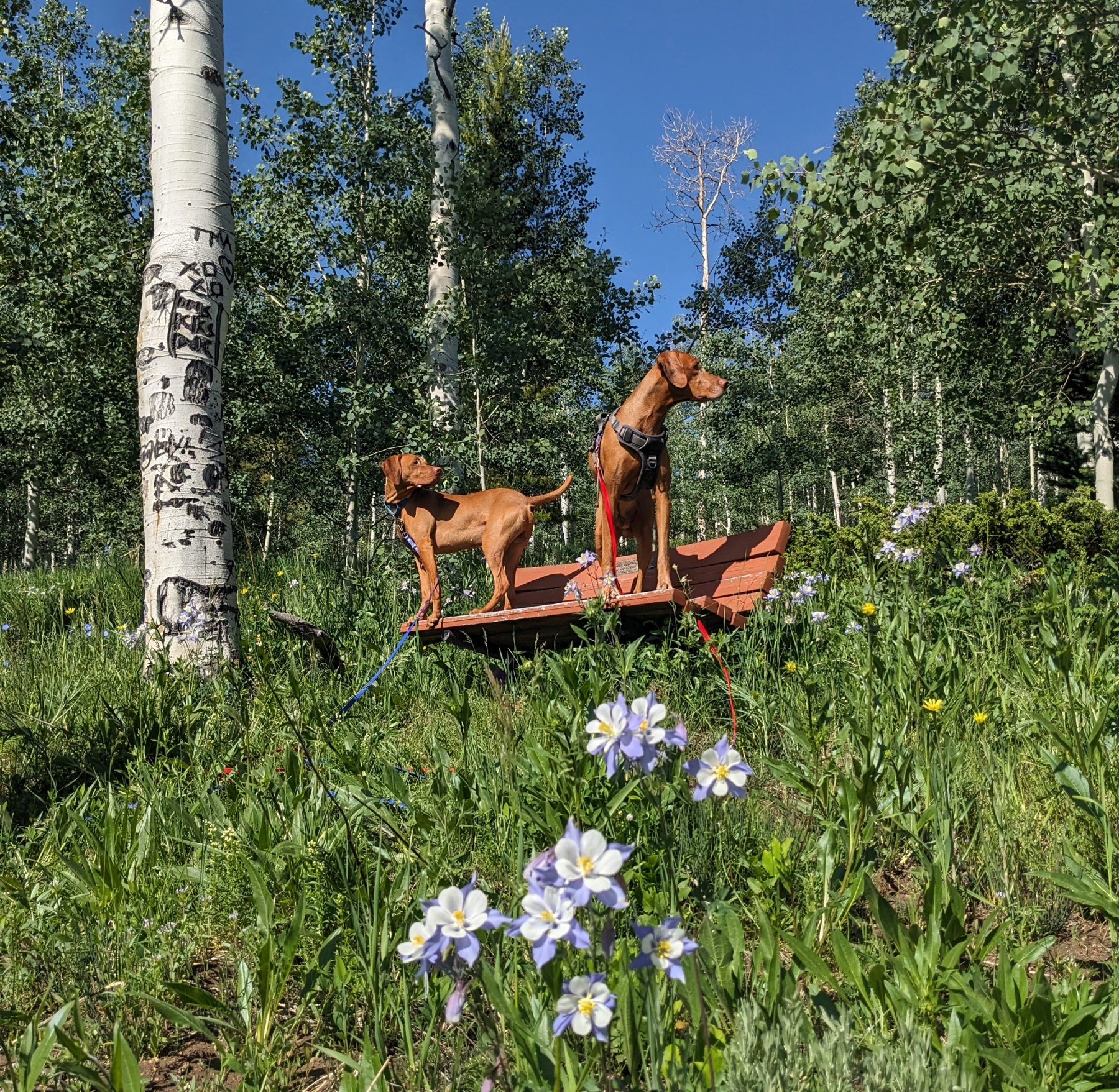
- Parks: benches, picnic tables, boulders, tree stumps
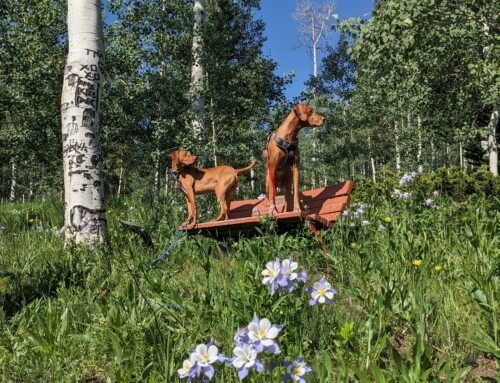
- Trails: fallen logs, bridges, rocks, and natural terrain
- Urban areas: staircases, ramps, rails, empty bike racks
With a little creativity, every walk can become an adventure and a training session.
Safety First
Because parkour is about interacting with the environment, safety is important. Start easy and work up to the more challenging things.
- Start small—low surfaces, wide beams, short jumps.
- Use a harness and leash for balance support if needed.
- Avoid slippery, sharp, or unstable objects.
- Pay attention to your dog’s age, fitness level, body awareness and comfort.
- Keep it positive—lots of praise, treats, and breaks.
Benefits of Dog Parkour
Parkour isn’t just a workout—it’s a whole-body and whole-mind activity. Some of the benefits include:
- Confidence Building: Nervous or insecure dogs learn to trust themselves and their handler by trying new challenges step by step.
- Physical Conditioning: Strengthens core muscles, improves balance, flexibility, and coordination.
- Mental Stimulation: Dogs have to think, problem-solve, and focus on their handler’s cues.
- Bonding: Working together to complete challenges deepens trust and teamwork between dog and human.
- Accessibility: Any breed, size, or age can do parkour—just adjust the challenges.
Dog parkour transforms ordinary walks into adventures. Whether it’s your tiny Chihuahua mix hopping onto a curb, your Lab balancing across a log, or your Old English Sheepdog bravely weaving through posts, each dog gets to shine in their own way.
With a little imagination, the world becomes your dog’s playground—and every outing becomes a chance to build strength, confidence, and connection.
Our goal is to positively impact the lives of as many dogs and their families as we can, in part through our extensive library of video, infographics and text articles. |







Leave A Comment